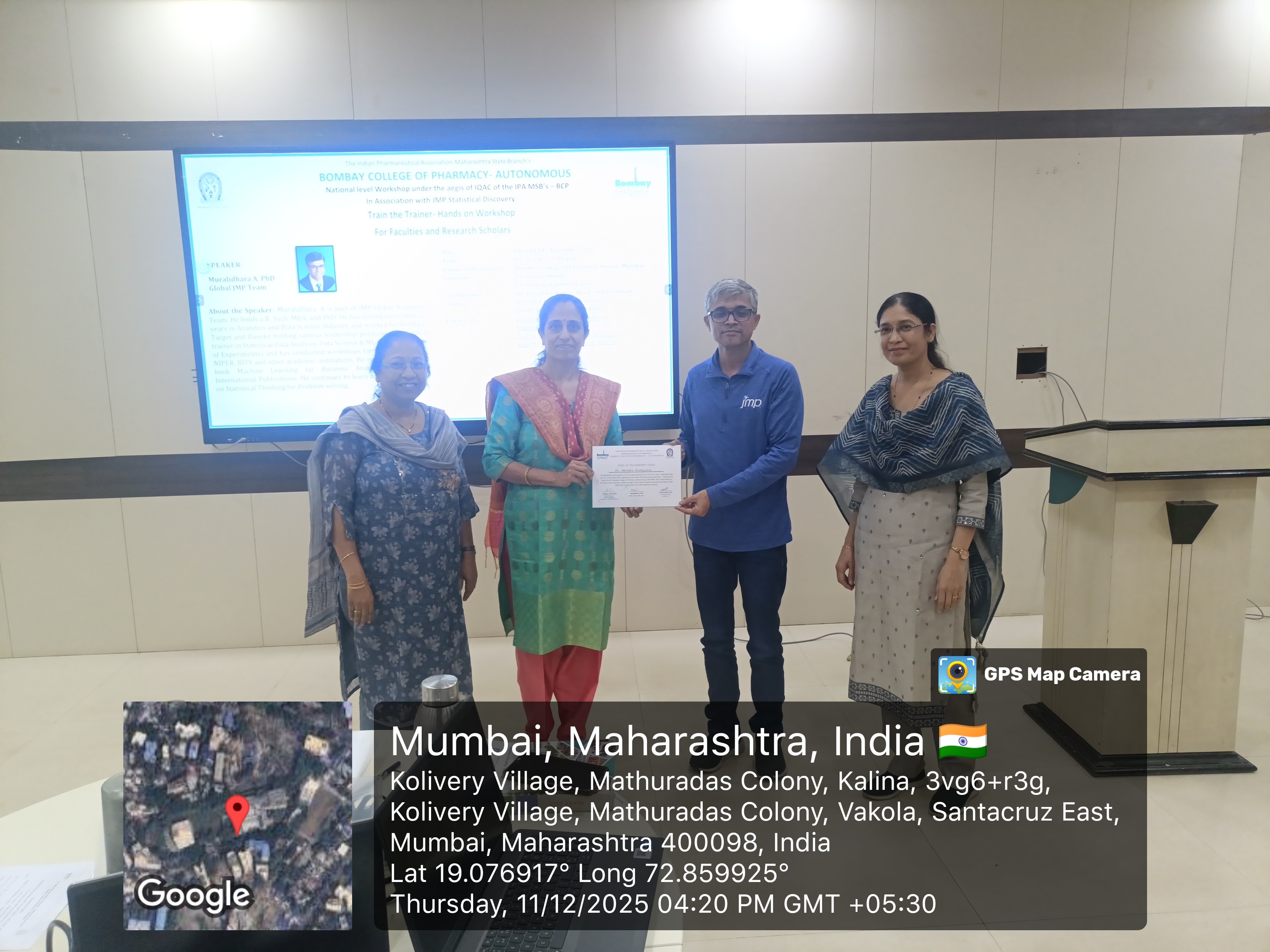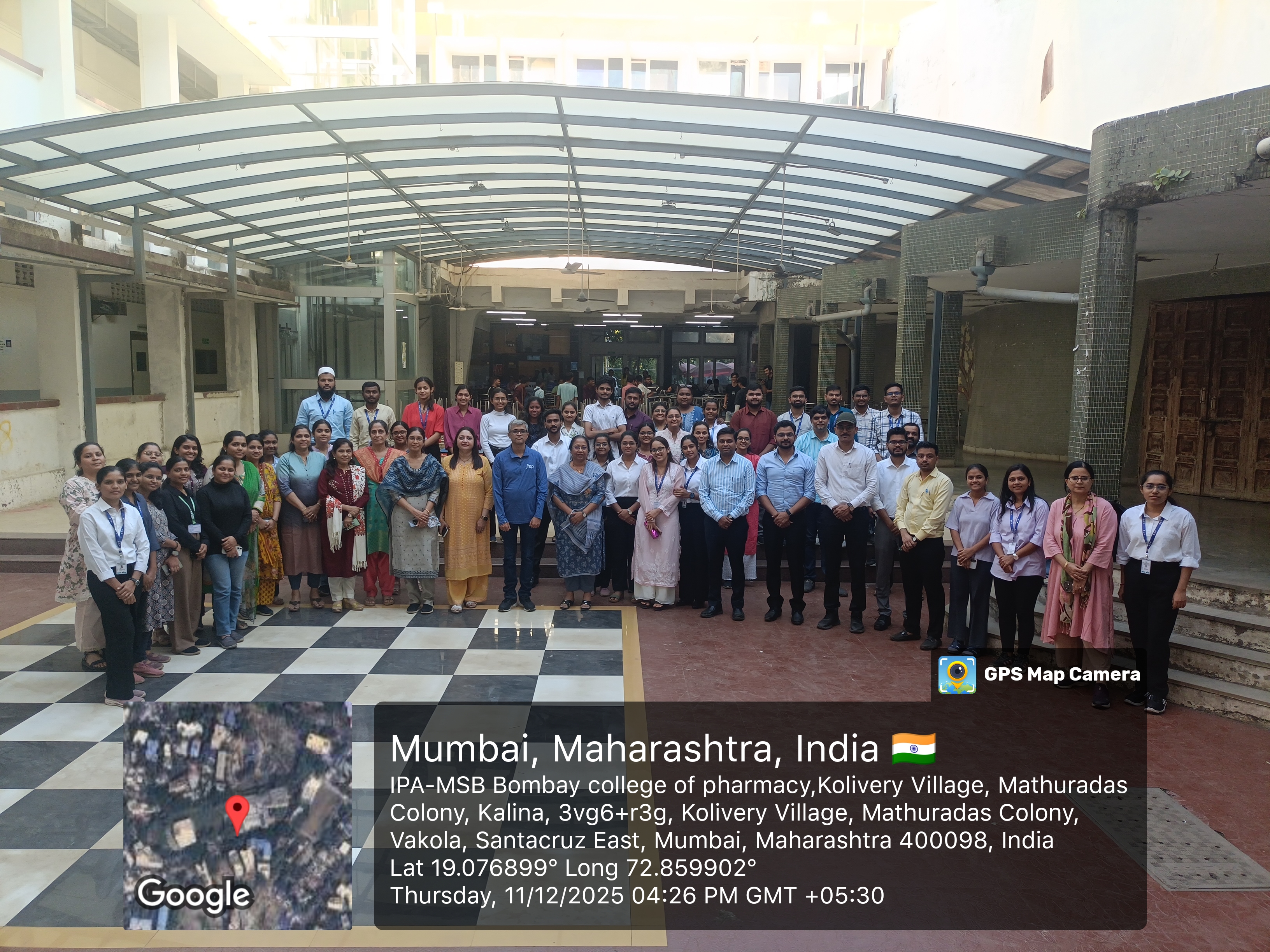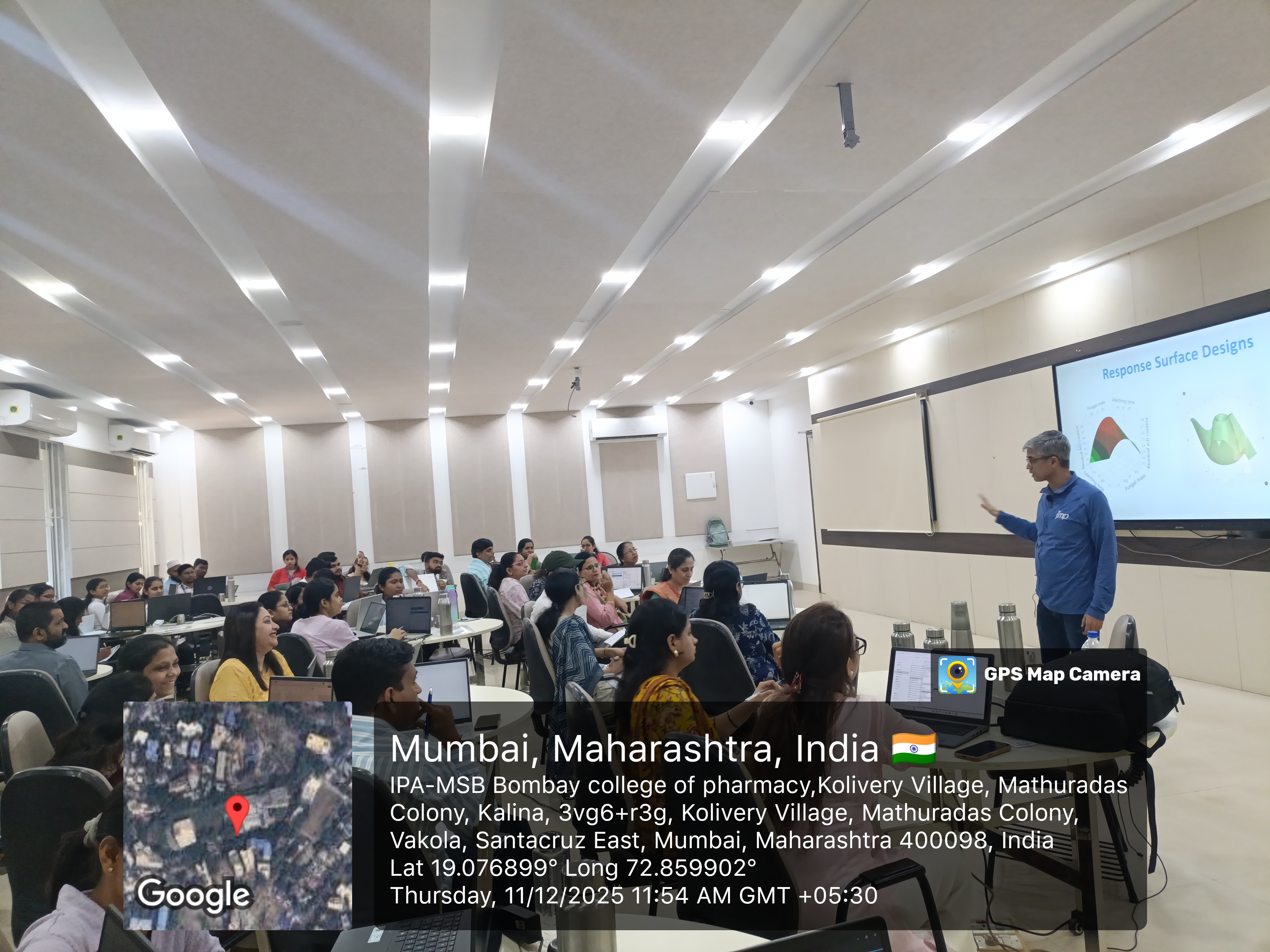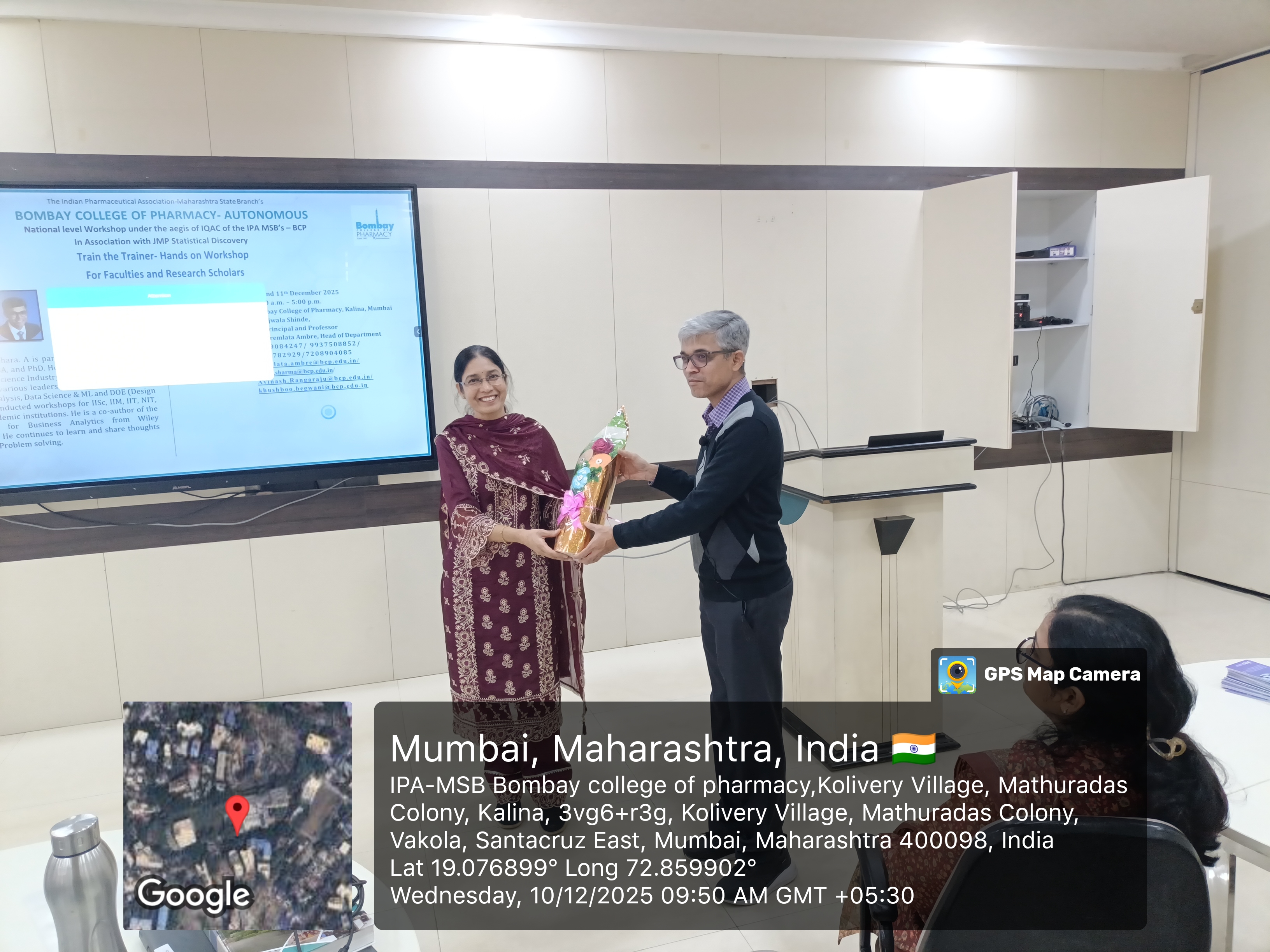
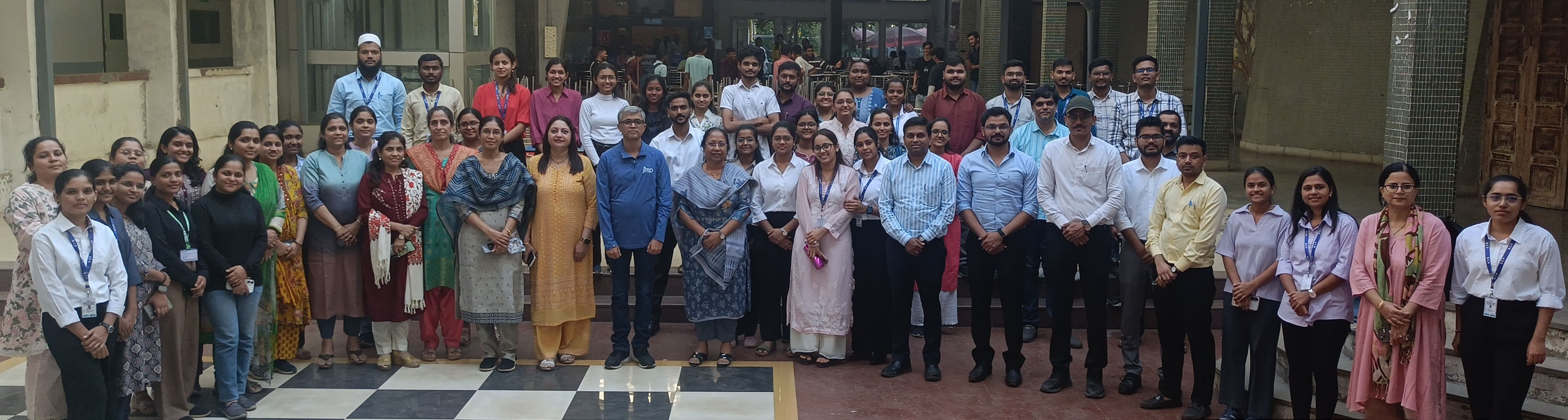
Bombay College of Pharmacy, under the aegis of the Internal Quality Assurance Cell (IQAC) and the Department of Pharmaceutical Chemistry, in association with the Indian Pharmaceutical Association (IPA), Maharashtra State Branch, and JMP Statistical Discovery, organized a National Level Train-the-Trainer Hands-on Workshop on Biostatistics and Design of Experiments (DoE) using JMP Software on 10th and 11th December 2025.
The objective of the programme was to enhance faculty competency in statistical analysis, experimental design, and data-driven decision-making, which are essential for quality teaching, research, and regulatory compliance in pharmaceutical sciences. The workshop targeted faculty members and research scholars, aligning with NAAC quality indicators related to faculty development and research capability enhancement.
The programme was conducted by Mr. Muralidhara A, Member, JMP Global Academic Team, an industry expert with over 22 years of experience in analytics, data science, and design of experiments. The workshop followed an outcome-based and experiential learning approach, combining conceptual sessions with extensive hands-on training using JMP software.
Day one focused on biostatistics, including statistical thinking, descriptive and inferential statistics, hypothesis testing, ANOVA, regression analysis, correlation studies, and advanced data visualization. Day two emphasized Design of Experiments (DoE), covering screening designs, factorial and fractional factorial designs, response surface methodology (RSM), mixture designs, and optimization techniques with real-time case studies.
The programme enabled participants to apply DOE principles to optimize experimental setups, improve data quality, interpret statistical results effectively, and support research publications and regulatory submissions. Participants were instructed to use their own laptops to ensure practical skill acquisition.
The workshop received active participation and positive feedback, demonstrating its relevance to academic and research practices. Certificates were issued to all participants upon successful completion.
The programme significantly contributed to capacity building of faculty, promotion of research excellence, and strengthening of quality assurance practices, thereby supporting the institution’s continuous improvement initiatives under NAAC and IQAC frameworks.